
The Ultimate Guide to Advanced Earlobe Reconstruction: The Pardue Flap Technique
Torn or enlarged earlobe piercings can detract from your appearance. At Dr. Amrika’s Aesthetics on Sarjapura Main Road Bengaluru, not only is the torn earlobe repaired, but also an earring placed immediately. No more waiting, no new piercing required!
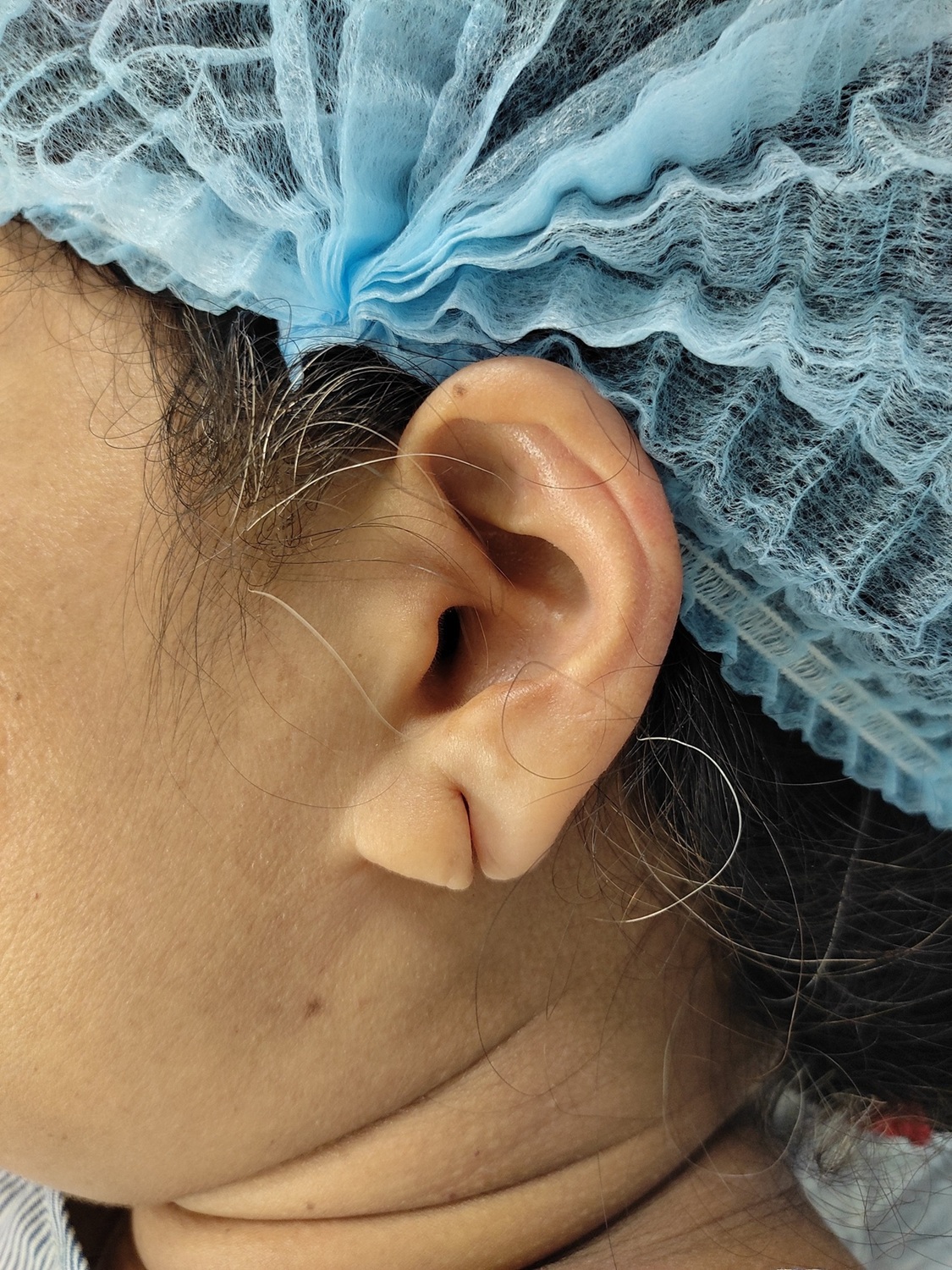
A torn, split, or significantly elongated earlobe can be a subtle yet deeply frustrating aesthetic concern. Whether caused by decades of wearing heavy statement earrings, a sudden traumatic pull, or the intentional stretching of gauge piercings, a damaged earlobe disrupts facial symmetry and limits your wardrobe and jewelry choices.
Historically, earlobe repair was treated as a basic, utility-driven procedure: surgeons simply sliced away the scarred borders of the split and stitched the raw edges back together in a straight line. While this traditional technique closes the gap, it fundamentally compromises the earlobe's natural architecture, destroys the original piercing channel, and frequently leaves patients with unnatural geometric notched edges.
To overcome these structural limitations, Dr. Amrika Seshadri utilizes the highly specialized Pardue Flap Technique—an advanced, hole-retaining reconstructive method that meticulously preserves or rebuilds a flawless piercing channel while restoring a perfectly rounded, natural earlobe rim. By combining this sophisticated flap rotation with a customized structural closure, dissolvable internal suturing, and a cutting-edge post-operative scar management protocol, Dr. Amrika ensures exceptional safety, ultra-refined aesthetics, and rapid, durable results.
1. The Clinical Pioneer of Ear Reconstruction in Bengaluru
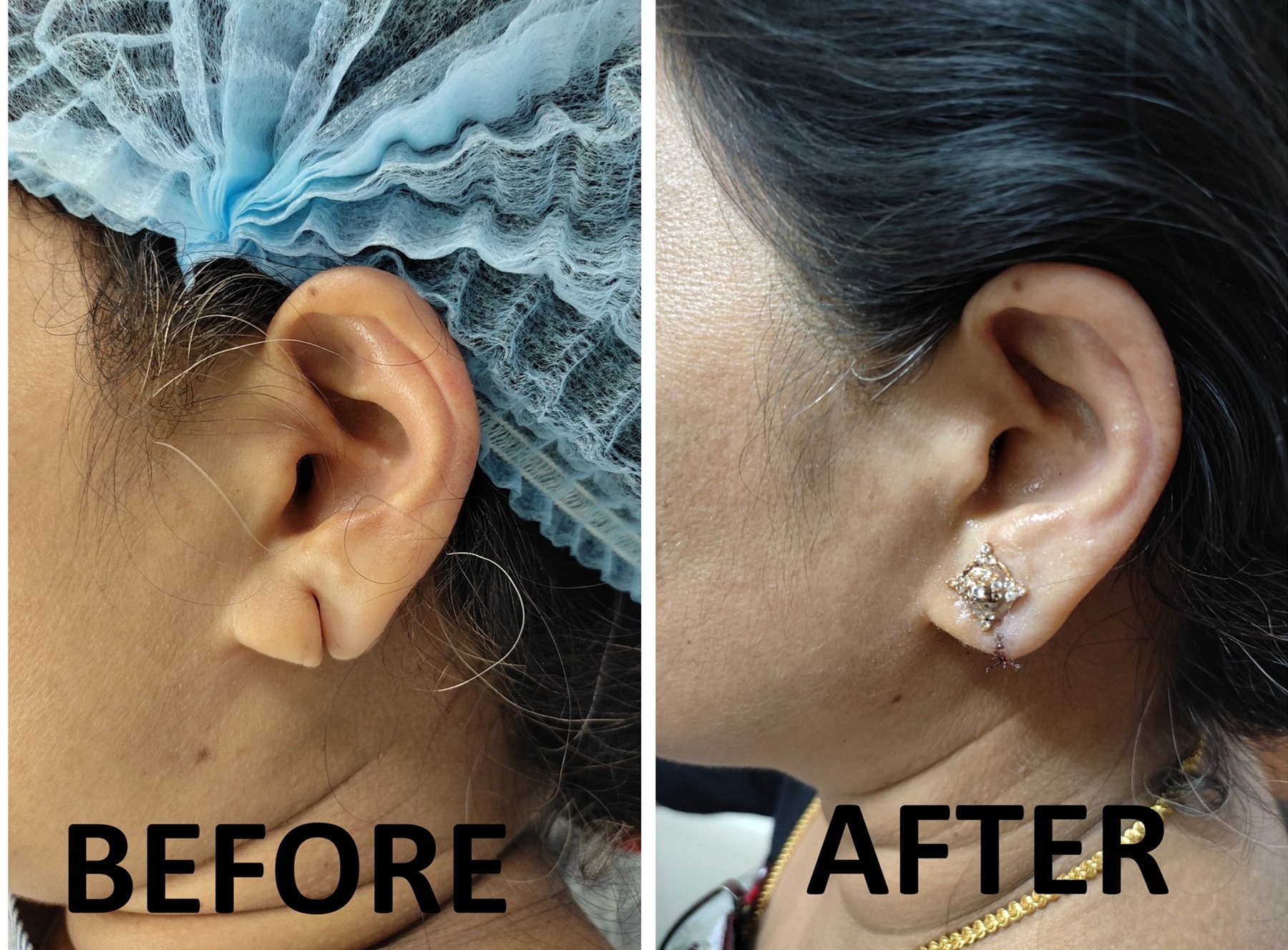
With over a decade of specialized experience in advanced plastic and reconstructive surgery, Dr. Amrika Seshadri has established a reputation built on uncompromising patient safety and the pursuit of elegant, natural-looking results. While basic linear earlobe stitching is common, true anatomical reconstruction using the Pardue Flap technique requires immense micro-surgical precision and specialized training.
Dr. Amrika is one of only a handful of plastic surgeons in Bengaluru qualified and experienced enough to routinely perform this sophisticated, hole-retaining procedure. Over the past 10 years, her clinical approach has focused on respecting the natural anatomical contours of the individual, ensuring the ears are restored to their pristine, original form without the telltale signs of a surgical intervention.
"An exceptional reconstructive result should never look surgical; it should look like it belongs to your natural frame, achieved through the safest, most precise medical technology available." — Dr. Amrika Seshadri
2. Understanding Earlobe Anatomy and Trauma Dynamics
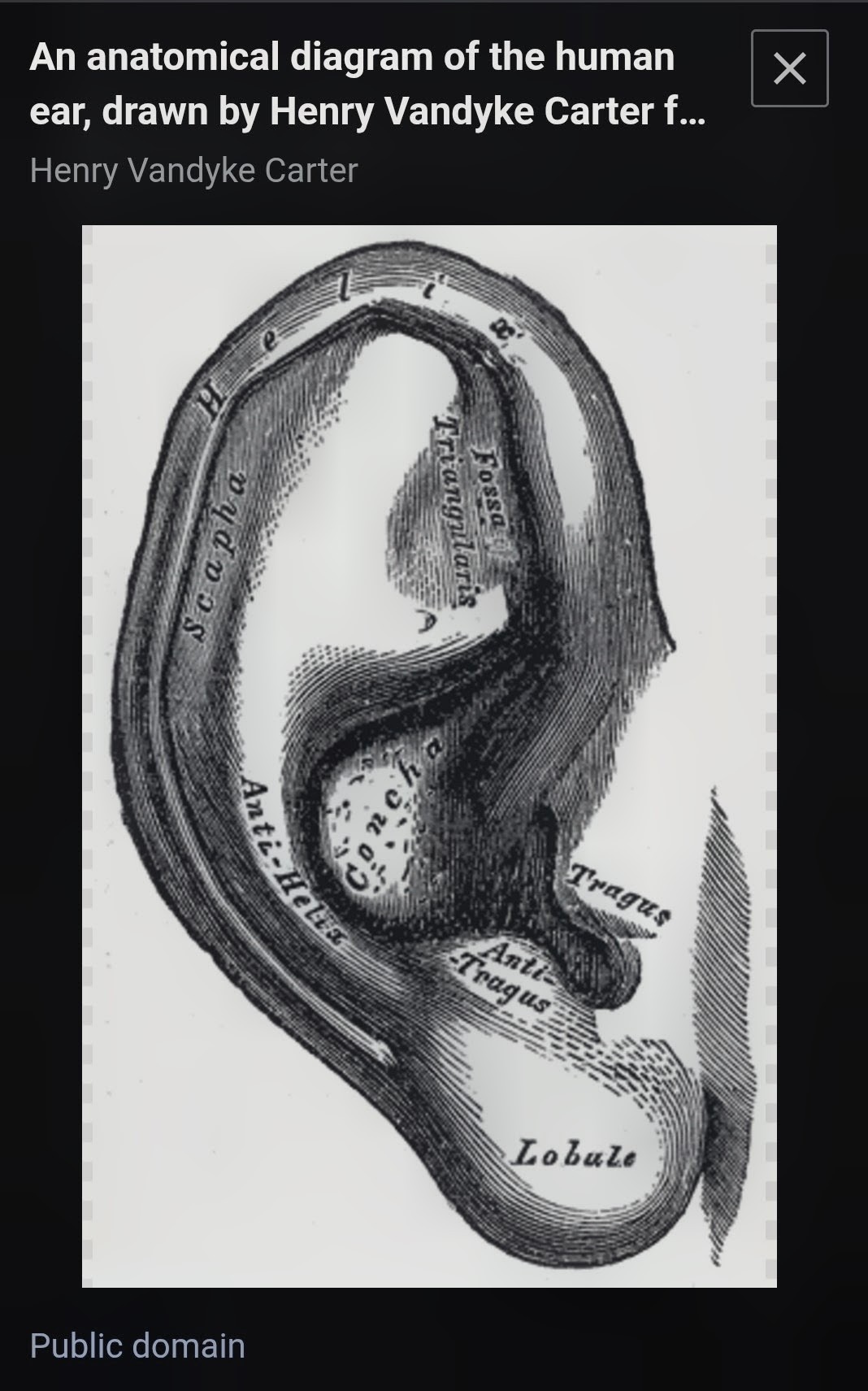
To appreciate why a specialized surgical approach is essential, it is necessary to examine the unique anatomical composition of the human earlobe (the lobule). Unlike the upper two-thirds of the ear, which are supported by a rigid framework of elastic cartilage, the earlobe is entirely soft tissue. It is comprised of a highly vascularized layer of subcutaneous adipose fat blanketed by a delicate dermal envelope.
Because the earlobe lacks a cartilaginous core, it possesses minimal intrinsic structural resistance against chronic down-force. When heavy earrings are worn consistently over several years, the constant gravitational pull puts the thin skin of the piercing tract under sustained mechanical stress. This triggers a physiological process known as pressure necrosis:
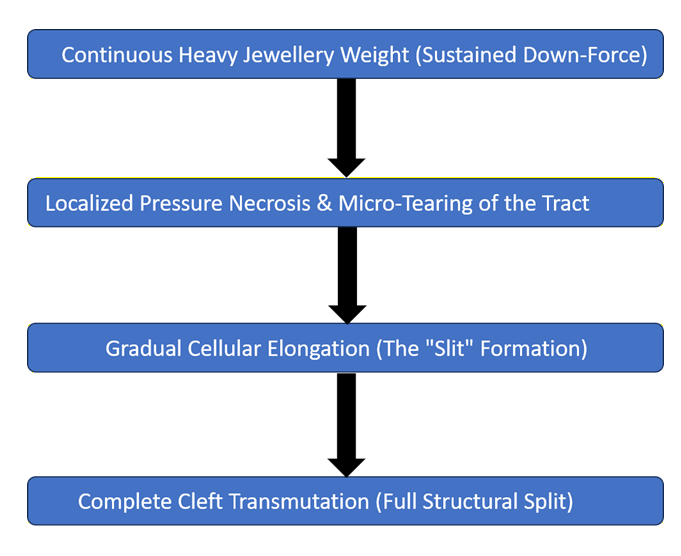
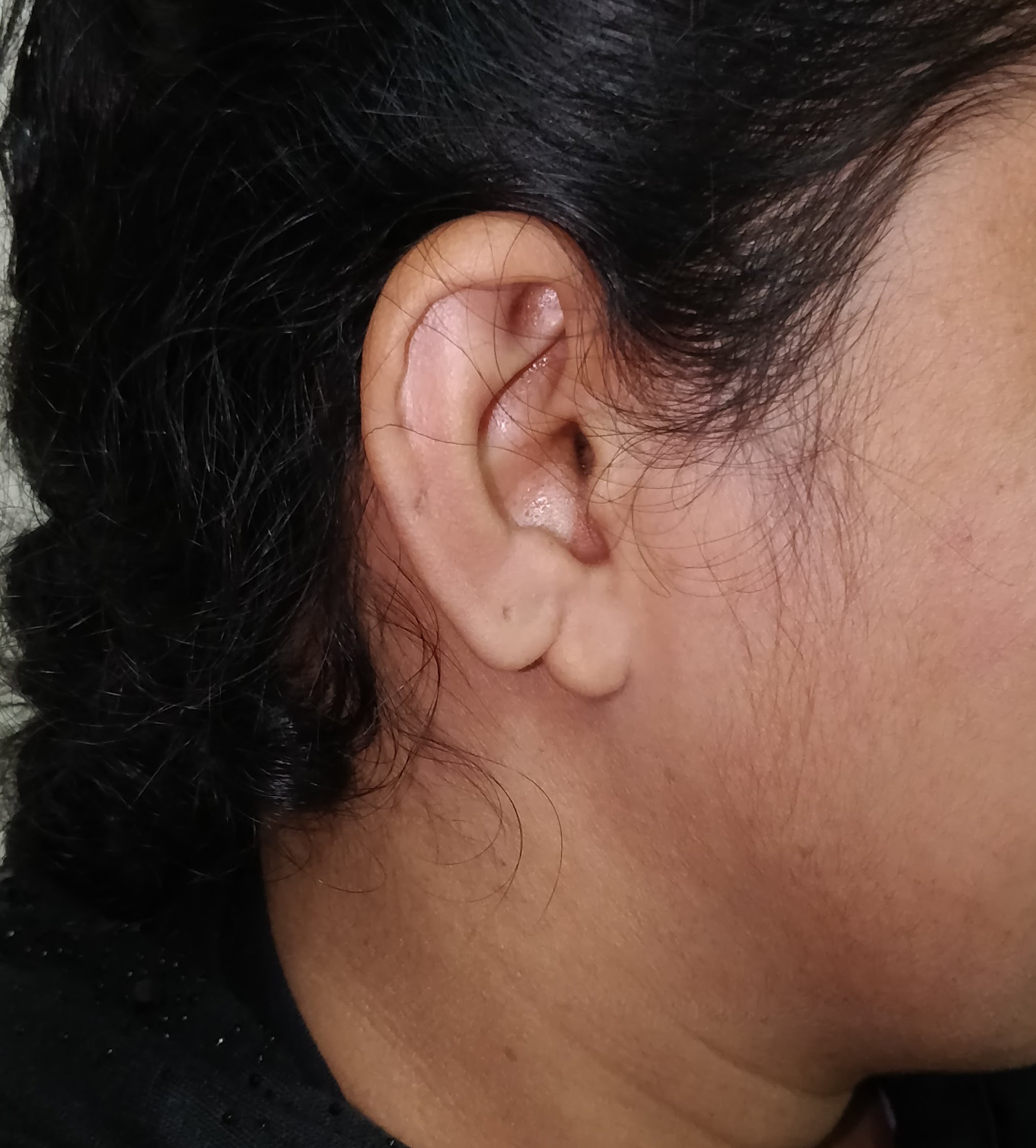
As the earring slowly cuts through the soft tissue, the body attempts to heal the micro-tears by forming a dense layer of mature epithelial skin along the sides of the widening channel. This means that a fully split earlobe is not a fresh wound; it is a permanent, stable, skin-lined cleft that will never knit back together on its own.
When a split occurs abruptly due to trauma—such as an earring getting caught in clothing or pulled by a child—the tissue tears violently across these soft adipose planes. If repaired improperly using rudimentary, straight-line stitching methods, the natural contracture of the surgical scar will pull the bottom rim of the ear upward, leaving a stark, artificial V-shaped indentation known as a "notched deformity."
3. The Structural Revolution: Immediate Earring Placement
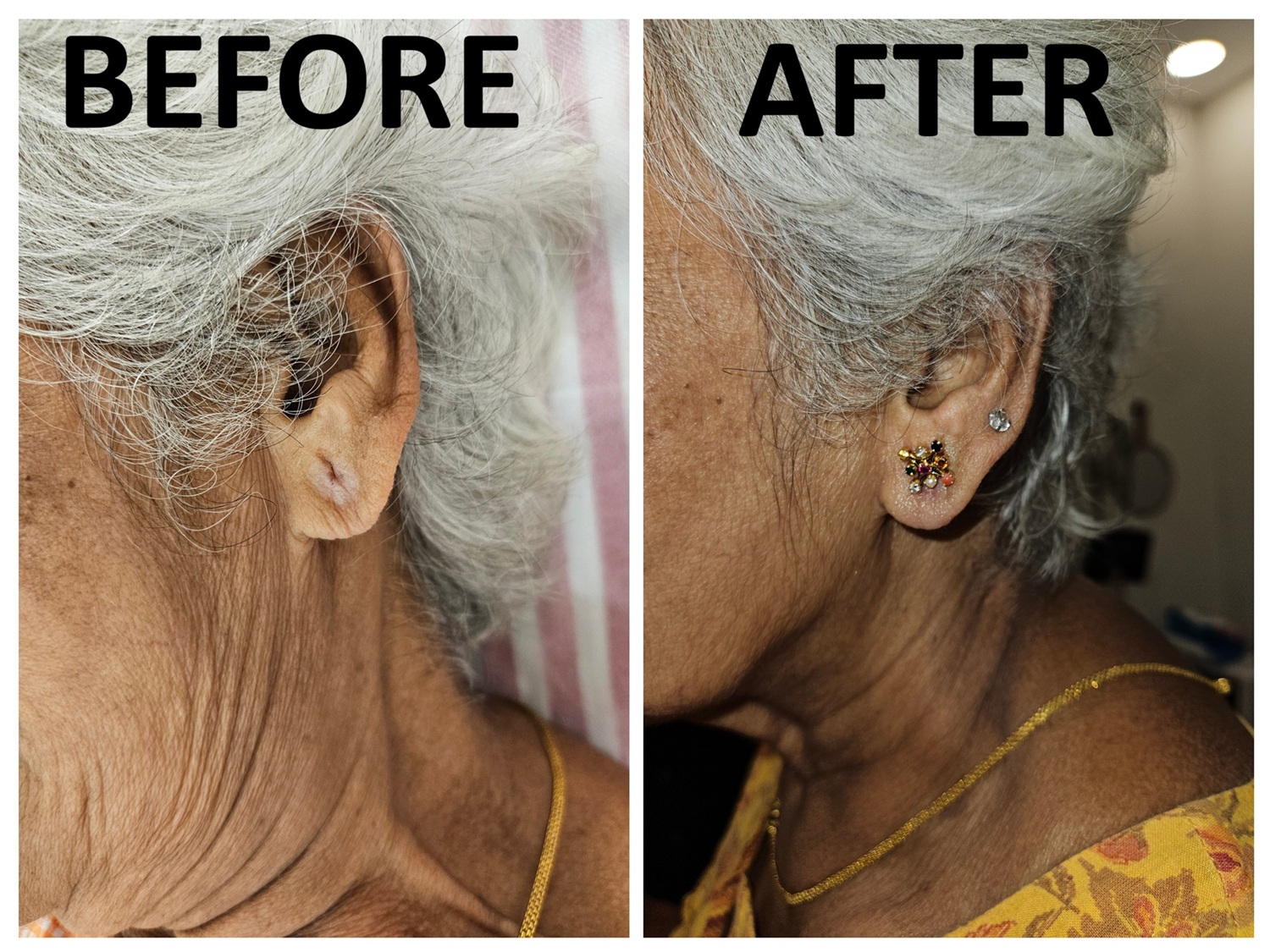
The single most definitive advantage of Dr. Amrika’s advanced Pardue Flap methodology over traditional repair methods is the immediate placement of a temporary jewelry during the procedure itself.
The Traditional Linear Repair (and Its Structural Flaws)
In a standard earlobe repair, a surgeon cuts away the skin-lined walls of the split to expose raw tissue and then places a series of straight stitches to bind the two halves together.
While straightforward, this method suffers from significant clinical disadvantages:
● Obliteration of the Piercing Site: The entire original piercing hole is cut out and closed. The patient is forced to live with a completely solid, unpierced earlobe for a mandatory healing period of 3 to 6 months. Only after this long delay can a new hole be blindly punched. This secondary puncture must penetrate a dense block of poorly vascularized scar tissue, which significantly increases the risk of crooked tracks, uneven positioning, chronic irritation, and immediate re-splitting.
● Linear Scar Contracture (Notching): As a straight surgical line heals, the scar tissue undergoes natural contraction. Because there is no structural resistance to interrupt this upward pull, the force drags the smooth bottom edge of the earlobe inward, creating an unsightly notch.
Dr. Amrika’s Advanced Pardue Flap Methodology
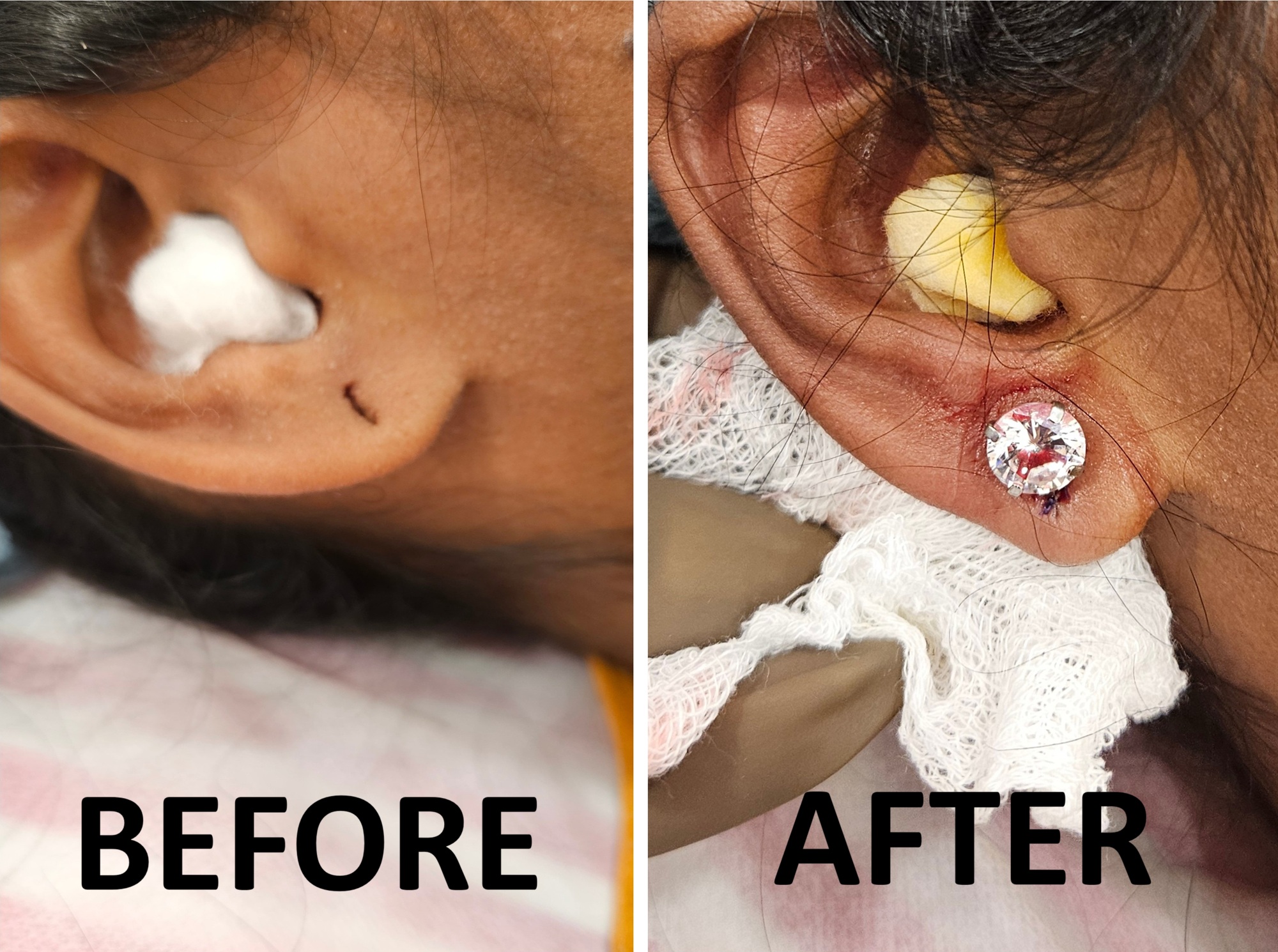
The Pardue Flap technique completely eliminates this frustrating waiting period. Instead of discarding all the skin lining the tear, Dr. Amrika carefully designs a small, vascularized flap of healthy tissue at the apex of the cleft—precisely where the original piercing sat.
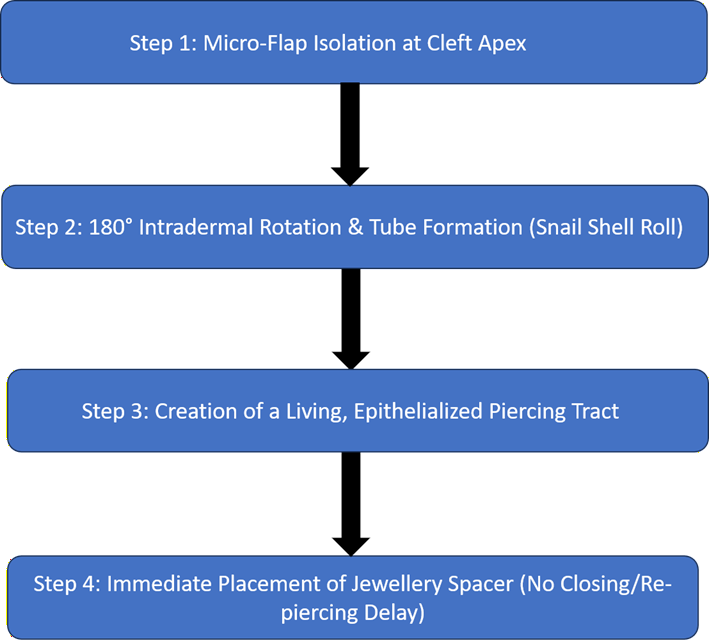
1. Flap Design & Isolation: Dr. Amrika identifies the healthy skin at the superior border of the split. Using micro-surgical instruments under high magnification, she dissects a precise rectangular flap of skin, leaving its blood supply fully intact.
2. The Intradermal Rotation: This flap is carefully rotated 180 degrees and rolled on itself like a tiny tube or "snail shell." This maneuver places the smooth, natural outer layer of the skin on the inside of a newly reconstructed channel.
3. The Living Tract Reconstruction: By lining the inner walls of the channel with a healthy tissue flap, Dr. Amrika creates a permanent, living, self-sustaining tract that cannot close or collapse.
4. Immediate Space Protection: Because the channel is fully lined with native skin at the time of closure, a temporary medical stud or spacer is placed inside the channel immediately on day one. You exit the clinic with a completely repaired earlobe and an open, perfect piercing tract. This eliminates the need for secondary re-piercing surgeries and prevents scar contraction from narrowing the channel.
5. Interlocking Base Closure (Z-Plasty Integration): To completely neutralize the risk of straight-line scar contracture, Dr. Amrika shapes the lower edge of the earlobe into interlocking, geometric tissue flaps. This disperses the directional forces of scar contraction horizontally rather than vertically, preserving a flawlessly smooth, rounded, and natural earlobe rim.
4. Structural Performance Comparison
| Engineering & Clinical Parameters | Traditional Linear Stitch Repair | Advanced Pardue Flap Technique (Dr. Amrika’s Protocol) |
|---|---|---|
| Piercing Tract Integrity & Timeline | Completely obliterated; requires 3–6 months of waiting followed by a painful re-piercing. | 100% Retained via Immediate Placement; a living, skin-lined channel is completed on day one. |
| Scar Directionality & Forces | Uninterrupted vertical line; prone to contracture that pulls the lower border upward. | Multi-directional vector dispersal via interlocking geometric flaps; neutralizes upward pulling. |
| Earlobe Rim Contour | High risk of "notched" indentation or sharp, unnatural geometric step-offs. | Flawlessly smooth and rounded; preserves the natural athletic curve of the native ear anatomy. |
| Suture Selection | Traditional non-absorbable threads; requires manual, anxiety-inducing removal at 7–10 days. | Advanced High-Tensile Dissolvable Sutures; melts away cleanly internally with zero structural drag. |
| Re-Piercing Vector Safety | Blind puncture forced through dense, weak scar tissue; highly prone to secondary failure. | Anatomically aligned, biological tract surrounded by healthy, re-contoured native tissue. |
| Safe Jewelry Weight Bearing | Extremely limited long-term; re-pierced scar tissue splits easily under minimal weight. | High structural load resilience; safely supports up to a 10-gram earring at just 2 months post-op. |
5. Advanced Materials and Scar Management Architecture
True clinical excellence in plastic surgery requires meticulous attention to the micro-environments of tissue healing. Dr. Amrika has overhauled the material selection and post-operative care of earlobe reconstruction to eliminate the traditional pain and long-term redness associated with plastic surgery.
High-Tensile Dissolvable Internal Suturing
Traditional earlobe repairs utilize standard nylon or prolene stitches that must be manually cut and pulled out of the ear 7 to 10 days after surgery. This process can cause minor surface trauma, provoke a secondary inflammatory response, and create unnecessary stress for the patient.
Dr. Amrika uses advanced, high-tensile, ultra-fine dissolvable monofilament sutures to close the earlobe in multiple structural layers. These specialized micro-sutures are placed meticulously beneath the skin's surface to hold the deep fat compartments securely in place. They maintain their structural strength throughout the critical initial phase of tissue bonding, preventing any spreading of the healing incision lines.
Once the internal tissue has successfully repaired itself, the sutures break down cleanly and are naturally absorbed by the body via safe microscopic hydrolysis. This eliminates the need for stitch removal entirely, protecting the fragile early skin bonds from external pulling and ensuring a seamless, smooth recovery.
The 3-Month Advanced Scar Management Protocol
While the initial skin closure occurs within the first week, the underlying collagen matrix undergoes structural remodeling for several months. Without proactive medical intervention, early scars can become raised, firm, hyperpigmented, or hypervascular (red and noticeable).
To ensure that surgical marks become virtually invisible, Dr. Amrika implements a rigorous, multi-action scar maturation protocol that targets the cellular environment of the dermis:
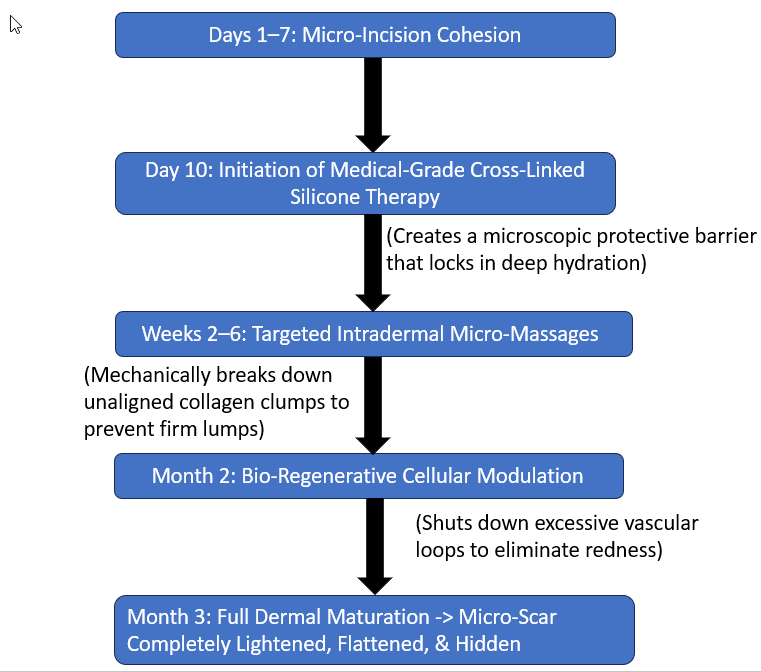
● Medical-Grade Cross-Linked Silicone Therapy: Beginning on day 10, patients apply an advanced, self-drying silicone gel compound twice daily. This creates an invisible, breathable protective sheet over the earlobe that optimizes hydration. This high moisture environment signals the body's cells to lay down collagen fibers in neat, parallel lines rather than chaotic, raised bundles, preventing the formation of thick or bumpy scars.
● Targeted Intradermal Micro-Massages: Starting at week two, patients are trained to perform specific, gentle, rotational pressure exercises across the earlobe. This direct physical stimulation breaks up firm collagen clumps, flattens the tissue planes, and speeds up the softening of the surgical site.
● Bio-Regenerative Cellular Modulation: Dr. Amrika introduces targeted topical recovery factors that work at a cellular level to turn off excessive blood vessel signaling. By closing down hyperactive capillary loops early, this protocol prevents long-term redness, allowing the incision line to change from a pink tone to a clear, soft hue that blends perfectly into your natural skin tone.
Thanks to this aggressive scar architecture refined over a decade of clinical practice, tissue firmness and discoloration are dramatically reduced, ensuring that any visual trace of the procedure completely fades away by month three.
6. Comprehensive Post-Operative Journey and Jewelry Loading Guidelines
Rebuilding a structurally resilient earlobe requires clear, structured phases of healing. Because the Pardue Flap technique builds a permanent, skin-lined channel right during the surgery, you do not have to endure the frustration of a completely closed earlobe or wait up to six months to wear jewelry again.
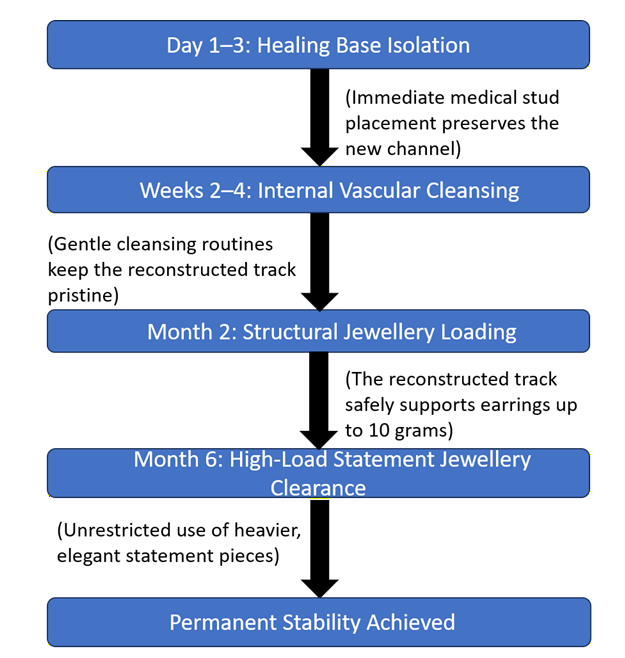
The Acute Phase (Days 1 to 7)
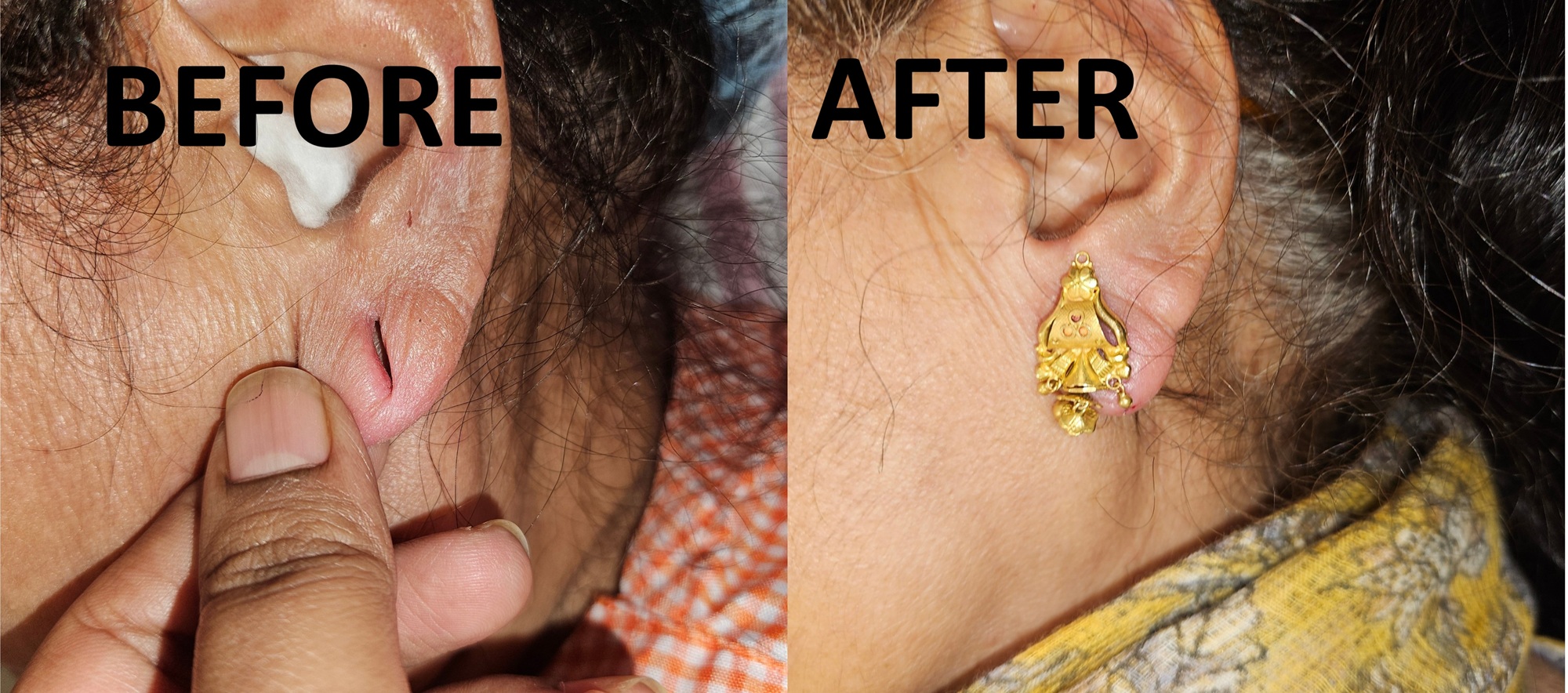
● Channel Safeguarding: Immediately following your procedure, Dr. Amrika inserts a soft, medical-grade, feather-light temporary stud directly into the newly sculpted flap channel. This ensures the structural integrity of the pathway is completely protected while the skin edges set.
● Showering & Cleansing: The earlobe must be kept dry for the first 48 hours. On day three, you may enjoy a comfortable, lukewarm shower, allowing clean water and a mild, fragrance-free cleanser to glide gently over the ear. Avoid aggressive scrubbing or direct water pressure.
The Intermediate Matrix Maturation (Weeks 2 to 4)
● Track Maintenance: The temporary spacer stud remains continuously in place to keep the pathway clear. You will perform a quick, gentle daily cleaning routine around the stud using a soft cotton swab and a sterile saline solution to keep the area pristine.
● Activity Adjustments: While normal daily routines and light walking are encouraged from day one, you should avoid strenuous cardiovascular workouts, heavy lifting, and competitive sports for the first two weeks. This prevents temporary spikes in blood pressure that could cause minor swelling in the earlobes. Avoid sleeping directly on your side; using a soft, U-shaped travel pillow can comfortably keep your ears free from friction overnight.
The Structural Weight-Bearing Milestone (Month 2)
By week eight, the internal skin-lined flap has fully integrated with the surrounding blood supply, and the interlocking base closure has achieved excellent tensile strength.
● Jewelry Introduction: At this two-month mark, you can confidently remove the temporary spacer stud and begin wearing standard, high-quality decorative earrings.
● Weight Allowance: The newly engineered tissue structure can safely accommodate earrings weighing up to 10 grams for daily wear. This allows you to return to elegant, classic jewelry styles far sooner than traditional methods allow.
Ultimate Structural Independence (Month 6)
At the six-month mark, the skin has completed its deep cellular healing cycle. The scar lines are flat, soft, and beautifully integrated into your natural skin. The earlobe has regained its full, elastic resilience, allowing you to wear heavier statement jewelry or larger pieces for special events with absolute confidence.
7. Extensive FAQ Section: Safety, Longevity, and Clinical Nuance
Q1: Is the Pardue flap earlobe repair procedure painful? What should I expect during a daycare recovery?
Not at all. The entire reconstruction is performed as a smooth, outpatient daycare procedure under a refined local numbing protocol. Dr. Amrika gently administers a long-acting, highly localized anesthetic mixture directly into the earlobe using an ultra-fine micro-needle. This completely numbs the nerve pathways before the surgery begins, ensuring you feel absolutely no sharp pain or discomfort during the procedure.
As the local numbing naturally wears off over the next few hours, the post-operative sensation is consistently described as a mild, temporary throb or a light warmth—very similar to the feeling of a fresh piercing. This minor soreness is easily managed with standard over-the-counter anti-inflammatories or mild pain relievers. Most patients do not require any prescription medications and return comfortably to remote or office-based work the very next morning.
Q2: Why choose the Pardue flap over a standard stitch repair if the traditional method is faster to perform?
While a standard repair takes less time on the operating table, it forces you to compromise on your long-term results. Traditional methods completely close the earlobe, forcing you to wait three to six months for it to heal before you can blindly punch a new hole through a thick layer of stiff, unyielding scar tissue. Furthermore, traditional straight stitches carry a high risk of pulling the bottom edge of the earlobe upward over time, leaving you with an unnatural, notched indentation on the rim.
The Pardue Flap technique is a highly precise architectural repair. It allows Dr. Amrika to build a living, skin-lined channel during the surgery, preserving your piercing site via immediate jewelry placement on day one and preventing the earlobe from collapsing. By combining this with advanced geometric closures (like a Z-plasty), she redirects scar forces horizontally, keeping the lower edge of your earlobe perfectly smooth, full, and round. It is the gold standard for patients who want to protect the natural beauty of their ears and wear earrings again safely.
Q3: How unique is this procedure? Can I get it done at any general plastic surgery clinic in Bengaluru?
No, this is a highly specialized technique that requires exceptional micro-surgical skill and deep experience with tissue transposition flaps. While almost any clinic can put basic linear stitches in a torn earlobe, Dr. Amrika Seshadri is one of only a handful of specialists in Bengaluru who perform this advanced procedure. Having refined this specific protocol over more than a decade of dedicated clinical practice, her mastery of the technique ensures a flawless, natural contour with immediate hole preservation that general methods simply cannot match.
Q4: I have noticed that surgical scars often remain red and firm for a long time. Will my earlobe look scarred or lumpy after three months?
No, it will not. In standard surgical practices, scars can stay red, stiff, or bumpy for six to twelve months because the tissue is left to heal on its own without specialized management. Dr. Amrika prevents this by utilizing high-tensile dissolvable internal sutures that melt away cleanly without irritating the skin, combined with a highly proactive, 3-month scar architecture protocol.
By combining daily medical-grade silicone gel applications with targeted rotational micro-massages and cell-modulating care, this advanced protocol optimizes hydration and physically breaks up unaligned collagen strands early in the healing process. It quickly shuts down hyperactive capillary loops, eliminating the common pink or red look of early scars. By month three, the incision line becomes remarkably flat, soft, and light, blending beautifully with the texture and tone of your surrounding skin.
Q5: Can I really wear an earring weighing up to 10 grams just two months after the surgery? Is that structurally safe?
Yes, it is entirely safe, but only because of the structural engineering of the Pardue flap and interlocking base closure. In a traditional repair, hanging weight on the ear after two months is highly dangerous because the new piercing track is placed through a weak, poorly vascularized scar line that can easily pull apart or stretch under minimal weight.
With Dr. Amrika's method, the interior of the piercing channel is lined with a healthy, self-sustaining flap of living skin that carries its own robust blood supply. Because the lower rim of the earlobe is reinforced with interlocking, zig-zag geometric tissue flaps, the gravitational weight is distributed evenly across a strong, resilient foundation. This advanced structural design allows the earlobe to safely support jewelry up to 10 grams at the two-month mark without stretching or risking a re-split.
Q6: Can this technique be used to fix earlobes that have been stretched out by large gauge piercings?
Yes, the Pardue flap is exceptionally well-suited for repairing ears stretched by gauge plugs or tunnels. Large gauge piercings create a unique structural problem: they leave an excess loop of stretched, thinned-out skin and cause significant volume loss in the core of the earlobe.
Dr. Amrika adapts the Pardue technique to remove the thin, unhealthy inner skin ring while preserving a precise, robust tissue flap to rebuild a natural piercing channel. She then redistributes the remaining healthy tissue using advanced geometric flaps to recreate a full, naturally proportioned, rounded earlobe shape. This advanced approach restores volume and contour to ears stretched by gauges, avoiding the flat, deflated look often left by standard repairs.
Q7: What are the primary risks or side effects associated with this advanced earlobe reconstruction?
Earlobe reconstruction is a safe, highly predictable outpatient procedure with a very low risk profile. Normal, temporary side effects include mild localized swelling, light bruising, and a subtle pink hue along the incision line during the first few weeks.
Rare but possible clinical complications include localized minor infection, a tiny pinpoint collection of fluid (hematoma), a slight asymmetry between the two earlobes, or a delayed healing response along the skin edges. Dr. Amrika significantly minimizes these risks by performing every reconstruction under strict sterile protocols, using advanced, bio-compatible dissolvable sutures, and guiding every patient through a comprehensive post-operative care and follow-up routine.
Q8: Will I ever need to have this procedure repeated, or are the structural results permanent?
The structural results of the Pardue flap repair are entirely permanent. Once the rotated skin flap integrates with the surrounding tissue and the interlocking base closure matures, the newly engineered earlobe becomes a solid, lasting part of your natural anatomy. The built-in piercing channel remains open permanently because it is lined with living, healthy skin.
However, it is important to remember that while the surgical repair is permanent, your natural earlobe tissue remains soft and pliable. If the earlobe is subjected to severe trauma again—such as a heavy earring getting caught or pulled forcefully—the tissue can tear just like a normal, unoperated ear. Practicing mindful jewelry habits ensures your beautiful, restored earlobes stay safe and pristine for life.
Q9: Who is the best doctor for this procedure of earlobe repair in Bengaluru?
Experience and complication handling trumps any other consideration in this straightforward procedure. Dr. Amrika has been performing this procedure with a great deal of personal expertise and amazing patient satisfaction. Choose a Plastic Surgeon who understands your needs and can provide beautiful and long-lasting results.
8. Reclaiming Your Aesthetic Expression
A torn or stretched earlobe should never force you to hide your ears behind your hair or give up wearing your favorite jewelry styles. Traditional, utility-driven stitching methods often fail to deliver because they ignore the delicate structural demands and natural curves of your ear anatomy, frequently leaving behind noticeable notches and weak scar tissue.
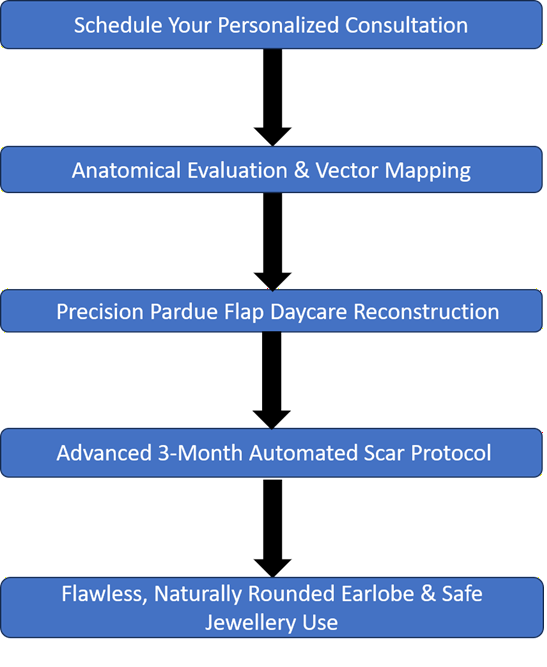
Under the expert care of Dr. Amrika Seshadri, you can achieve a truly refined, reliable result. By combining the sophisticated, hole-retaining Pardue Flap technique with immediate jewelry spacer placement, advanced dissolvable internal suturing, and a dedicated 10-year refined scar maturation protocol, Dr. Amrika delivers a comprehensive solution that prioritizes your lifestyle while restoring an elegant, naturally rounded contour.
This advanced method completely eliminates the risk of notched deformities and restores your ear's structural strength, allowing you to safely wear earrings up to 10 grams just two months after surgery. The next step toward restoring your symmetry and stepping forward with absolute confidence is scheduling an in-depth, personalized consultation with Dr. Amrika. Together, you will map out a customized surgical plan tailored perfectly to your unique anatomy and personal aesthetic goals.